What it covers
A change policy covers the merge requests it matches and lists the controls they must pass. Policies are ordered: the first active one that matches a merge request decides how it is handled, and a catch-all covers the rest.
Match what matters
Match on target and source branches, repositories, changed paths (any of, none of, only in), the size of the change, its author (people, bots or named accounts), labels and draft state.
Read the docsThree change types
Standard changes merge once their checks pass, normal changes also need a change approval, and emergency changes may merge before the approval and are reviewed afterwards.
Read the docsControls, each switched on as needed
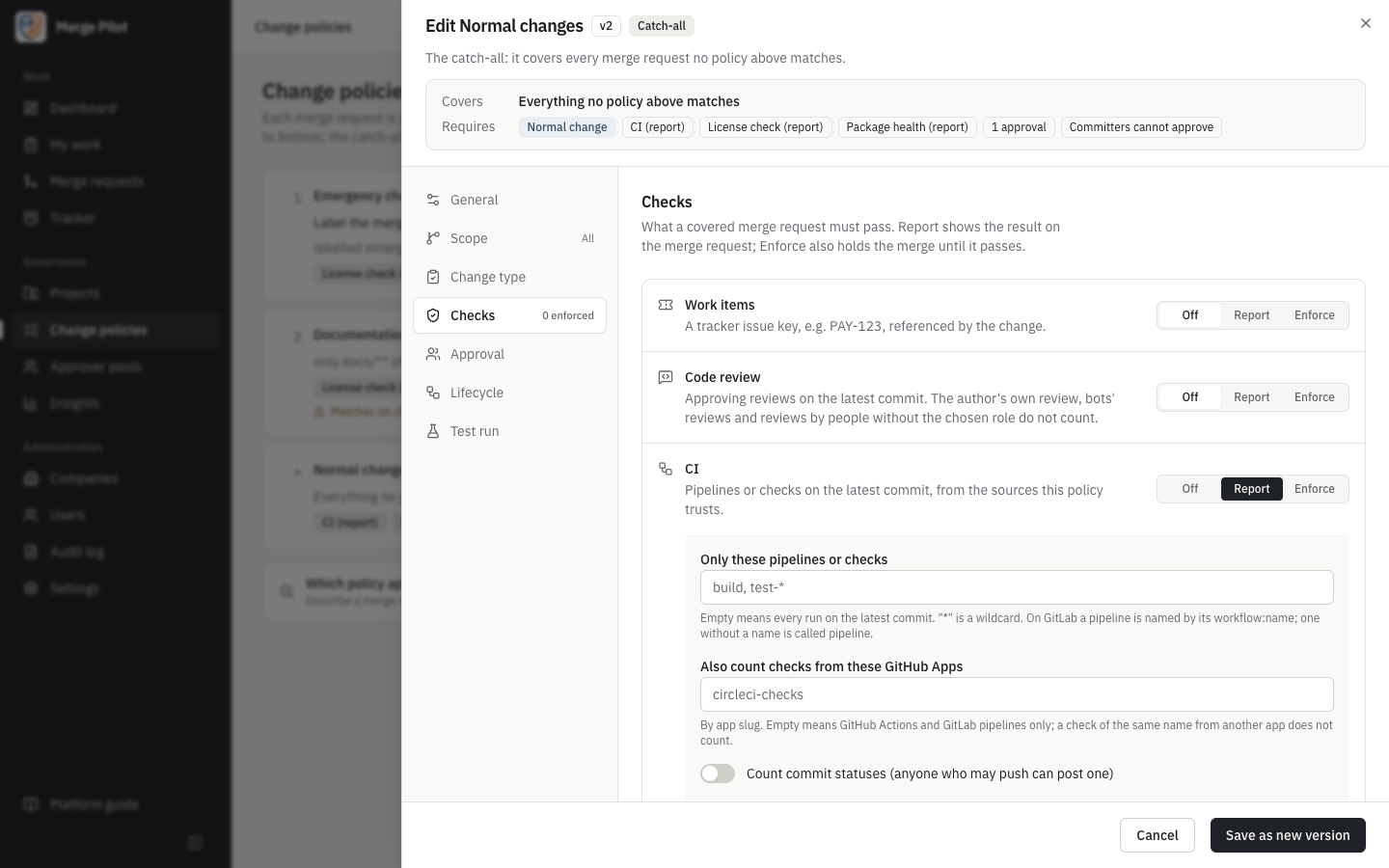
Work items, code review, CI, secret scan, dependency scan, licenses, package health, dependency sources, CI configuration check, signed commits, container image scan and infrastructure check, each off, reported or enforced; risk sets a hold level, approval follows the change type, and change freezes apply under every policy.
Read the docsCompany defaults, policy overrides
Scan settings are set once for the company. A policy can take over chosen ones (such as denied licenses, the minimum package age or the KEV and EPSS holds) and set its own risk hold level for the changes it covers.
Read the docsVersioned and testable
Every save is a new policy version, and each merge request records the version that decided it. Which policy applies? shows which saved policy covers a described change and why; Test run tries your unsaved edits on a real merge request.
Read the docsFour-eyes on configuration
With Review control changes on, a change to a policy, an approver pool, the risk settings, change freezes or sign-in waits until a second person approves it: another administrator, or for policies and pools also a policy manager.
Read the docs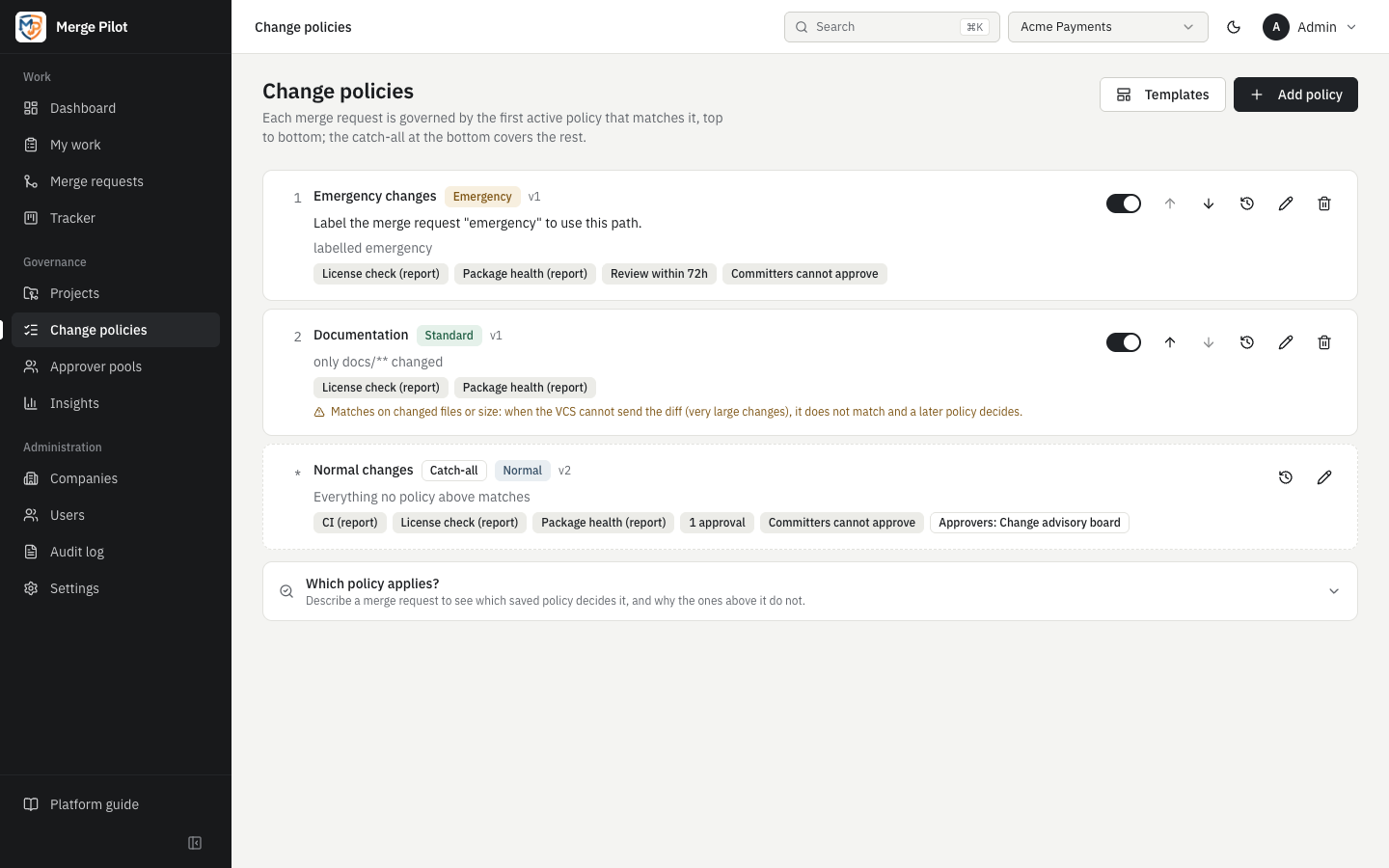
See it on your own repositories
Ask for a demo on your own GitLab or GitHub repositories.